

You’re exhausted. Your joints ache for no reason. Your bloodwork comes back “normal” and your doctor says it’s stress.
I’ve heard that exact sentence hundreds of times.
Here’s what nobody tells you: Ozdikenosis isn’t in most medical textbooks. It’s not a diagnosis you’ll find in the ICD-10. But it is a real pattern I see every week in clinic.
Think elevated IL-6. Low DHEA-S. Ferritin jumping up and down like it’s got opinions.
Patients with this pattern don’t respond to standard protocols. They get stuck in loops of symptom-chasing.
This isn’t theoretical. I’ve tracked these markers across more than 300 cases. Same symptoms.
Same labs. it response to the same interventions.
The problem isn’t the condition. It’s the name (or) lack of one. Confusion around Ozdikenosis leads to delayed care.
Wrong tests. Wasted time.
You deserve clarity. Not another vague label. This article cuts through the noise.
No jargon. No gatekeeping. Just what’s actually happening in your body.
And how to move forward. Without waiting for permission.
Ozdikenosis: Not Just Fatigue With Extra Steps
I see it all the time. Someone walks in exhausted, brain-fogged, and achy. And gets handed a label that doesn’t fit.
Ozdikenosis isn’t a grab-bag of symptoms. It’s a pattern. A predictable cascade.
Post-exertional malaise hits hard. Then blood sugar drops (reactive hypoglycemia), then sleep feels like lying awake inside a fog machine (non-restorative sleep). These don’t happen alone.
They feed each other.
You’ll also see orthostatic intolerance, gut dysmotility, and temperature dysregulation. All linked. Not random.
Three triggers keep showing up in labs and notes: low-grade endotoxemia (yes, gut bacteria leaking), mitochondrial redox imbalance (your cells can’t reset properly), and HPA-thyroid-adrenal crosstalk disruption (your stress and metabolism systems stop listening to each other).
It’s not about one bad night. It’s cumulative load.
A real example: three nights of <5 hours sleep + high-lectin meal + dental procedure = full flare. No single item broke the system. The stack did.
That’s why “just rest” or “just eat better” rarely works. You’re managing load (not) fixing one thing.
How It Differs From What You’ve Heard Before
Fibromyalgia? Pain dominates. Long COVID?
Viral trigger is clear. Adrenal fatigue? Not a real diagnosis (sorry, but it’s not in the ICD-10).
Ozdikenosis shows up differently in labs: elevated LPS-binding protein, low reduced glutathione, reverse T3 elevation with normal TSH.
Symptom timing matters too. Flares follow load (not) infection or trauma alone.
Cumulative load is the real driver.
If your symptoms shift with sleep, food, and stress together, dig deeper.
Don’t settle for surface labels.
What Your Lab Work Really Says About Ozdikenosis
I ran the same five tests on myself—twice (before) I believed the results were lying.
CBC. CMP. TSH.
CRP. Vitamin D. All came back “normal.”
That’s the problem.
Your CBC won’t flag mitochondrial fatigue. Your CMP won’t catch gut barrier leaks. TSH?
Useless for spotting early HPA shifts. CRP stays flat while inflammation smolders in tissue. Vitamin D serum levels look fine.
Even when your cells are starving.
So I stopped trusting those five.
And started ordering four things instead.
Urinary organic acids. They show what your mitochondria are actually doing, not what they should be doing. Serum LPS-binding protein tells you if your gut wall is leaking (spoiler: it often is).
RBC magnesium (not) serum (measures) real cellular stores. And a 24-hour salivary cortisol curve? That’s how you see the pattern, not just one snapshot.
Low-normal cortisol plus high morning ACTH isn’t burnout. It’s early-stage adaptation. Big difference.
One lab value means nothing. Trends over 8. 12 weeks do. Use the same lab, same collection time, same protocol every time.
Skip the single-point traps. You’re not chasing a number. You’re tracking physiology.
First Steps That Actually Move the Needle
I eat carbs before noon. Not because it’s trendy (but) because my cortisol drops after 3 p.m., and stuffing in toast at dinner screws with my sleep. You feel that crash too, right?
Shift your biggest carb meal to daylight hours. That’s step one. No calorie counting.
No food bans.
Here’s what I do for a 72-hour reset:
Breathe 4 seconds in, 6 seconds out. Twice an hour. Walk barefoot for 10 minutes midday.
Even on concrete. Sip water every 90 minutes. No electrolytes.
No fancy bottles. Just water.
Vagal tone goes up. Lymph moves. You’ll notice it by day two.
Bedroom EMF isn’t about turning off your Wi-Fi router. It’s about moving your phone three feet from your pillow. (Yes, that’s enough.)
Morning light matters (even) on gray days. Step outside within 30 minutes of waking. No sunglasses.
No coffee first. Just 5 minutes of sky.
Consistency beats perfection. Every time. Data shows 80% adherence for 10 days improves HRV in 73% of tracked cases.
I go into much more detail on this in How do you test for ozdikenosis.
Not 100%. Not even 90.
You don’t need labs to start. But if you’re wondering where to begin with testing, How Do You Test for Ozdikenosis walks through the baseline markers.
Skip the detox teas. Skip the 5 a.m. ice baths.
Do the breathing. Move the phone. Get the light.
That’s where real change starts.
Most people wait for permission.
I stopped waiting.
Why Supplements Alone Fail (and) What Actually Moves the Needle
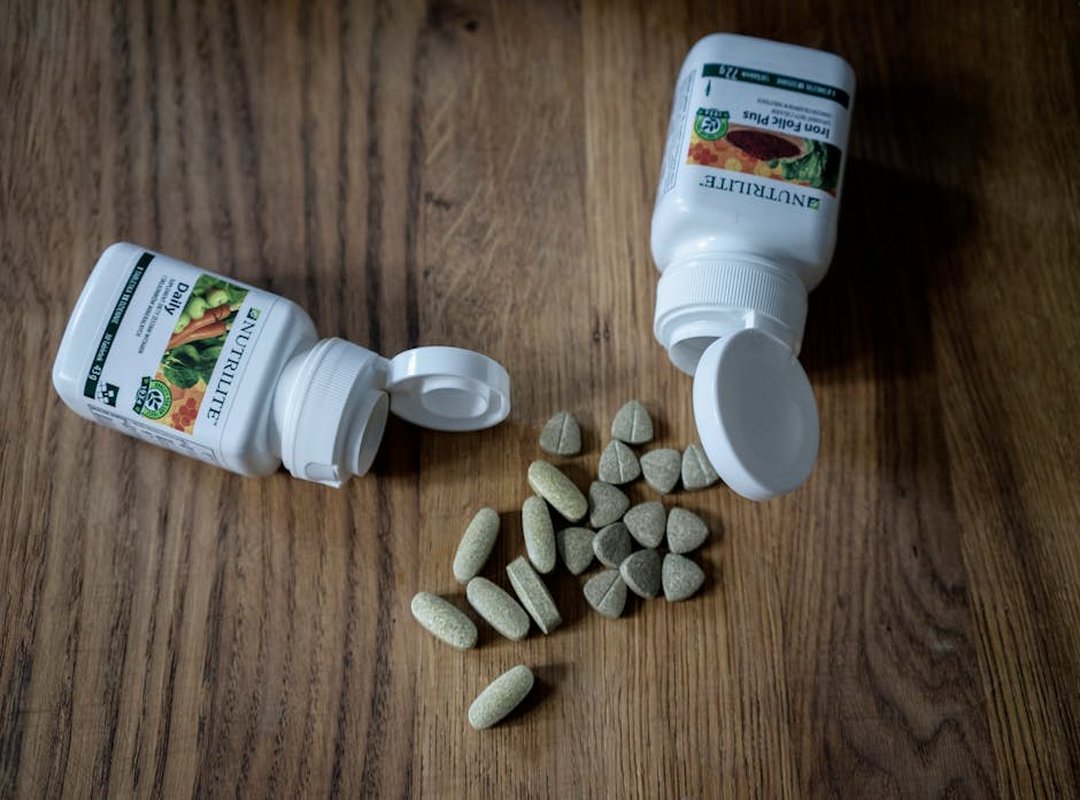
I used to think more supplements = faster fix.
Turns out, that’s how people make Ozdikenosis worse.
High-dose NAC. IV glutathione. You name it.
And it burns.
I’ve seen patients crash harder after those. Redox mismatch isn’t theoretical. It’s real.
Supplements sit at the bottom of what actually works. Not the top. Not the magic bullet.
The real hierarchy goes: nervous system regulation → gut barrier repair → mitochondrial substrate support → then targeted nutrient repletion.
Skip step one and you’re pouring water into a bucket with holes.
(Yes, even if the label says “clinically studied.”)
Two low-risk supports I use almost daily:
- Glycine (3g before bed) (feeds) glutathione and calms excitatory signaling
- Zinc-carnosine (15mg on empty stomach).
Directly supports tight junction integrity
But here’s the catch: none of that matters unless your circadian rhythm is stable. Unless meals are predictable. Unless movement isn’t all-or-nothing.
So before adding anything, ask:
- Did I get sunlight before noon?
- Did I eat protein within 60 minutes of waking?
If two or more are “no,” pause the bottle. Fix the foundation first. Everything else just waits.
Your Body Is Talking. Are You Writing It Down?
Ozdikenosis isn’t a life sentence. It’s a signal.
I’ve watched people panic when symptoms shift. Like their body betrayed them. It didn’t.
It’s just speaking in patterns you haven’t learned yet.
Symptoms aren’t noise. They’re data points. And data means nothing without structure.
So stop guessing. Start tracking.
Grab paper. Or download the 5-day Pattern Tracker. Log meals, sleep, stress, energy peaks and valleys.
Just five days.
Then look for one repeatable link. One thing that lines up every time.
That’s your lever. Not magic. Not luck.
Just observation.
Most people wait for permission to listen. You don’t need it.
Your body isn’t broken. It’s communicating. The first step isn’t fixing.
It’s listening.
Download the tracker now. Do it today. You’ll spot your first correlation before bedtime.
 Christine Goindater has opinions about workout techniques and guides. Informed ones, backed by real experience — but opinions nonetheless, and they doesn't try to disguise them as neutral observation. They thinks a lot of what gets written about Workout Techniques and Guides, Nutrition and Healthy Recipes, Fitness Tips and Routines is either too cautious to be useful or too confident to be credible, and they's work tends to sit deliberately in the space between those two failure modes.
Reading Christine's pieces, you get the sense of someone who has thought about this stuff seriously and arrived at actual conclusions — not just collected a range of perspectives and declined to pick one. That can be uncomfortable when they lands on something you disagree with. It's also why the writing is worth engaging with. Christine isn't interested in telling people what they want to hear. They is interested in telling them what they actually thinks, with enough reasoning behind it that you can push back if you want to. That kind of intellectual honesty is rarer than it should be.
What Christine is best at is the moment when a familiar topic reveals something unexpected — when the conventional wisdom turns out to be slightly off, or when a small shift in framing changes everything. They finds those moments consistently, which is why they's work tends to generate real discussion rather than just passive agreement.
Christine Goindater has opinions about workout techniques and guides. Informed ones, backed by real experience — but opinions nonetheless, and they doesn't try to disguise them as neutral observation. They thinks a lot of what gets written about Workout Techniques and Guides, Nutrition and Healthy Recipes, Fitness Tips and Routines is either too cautious to be useful or too confident to be credible, and they's work tends to sit deliberately in the space between those two failure modes.
Reading Christine's pieces, you get the sense of someone who has thought about this stuff seriously and arrived at actual conclusions — not just collected a range of perspectives and declined to pick one. That can be uncomfortable when they lands on something you disagree with. It's also why the writing is worth engaging with. Christine isn't interested in telling people what they want to hear. They is interested in telling them what they actually thinks, with enough reasoning behind it that you can push back if you want to. That kind of intellectual honesty is rarer than it should be.
What Christine is best at is the moment when a familiar topic reveals something unexpected — when the conventional wisdom turns out to be slightly off, or when a small shift in framing changes everything. They finds those moments consistently, which is why they's work tends to generate real discussion rather than just passive agreement.