
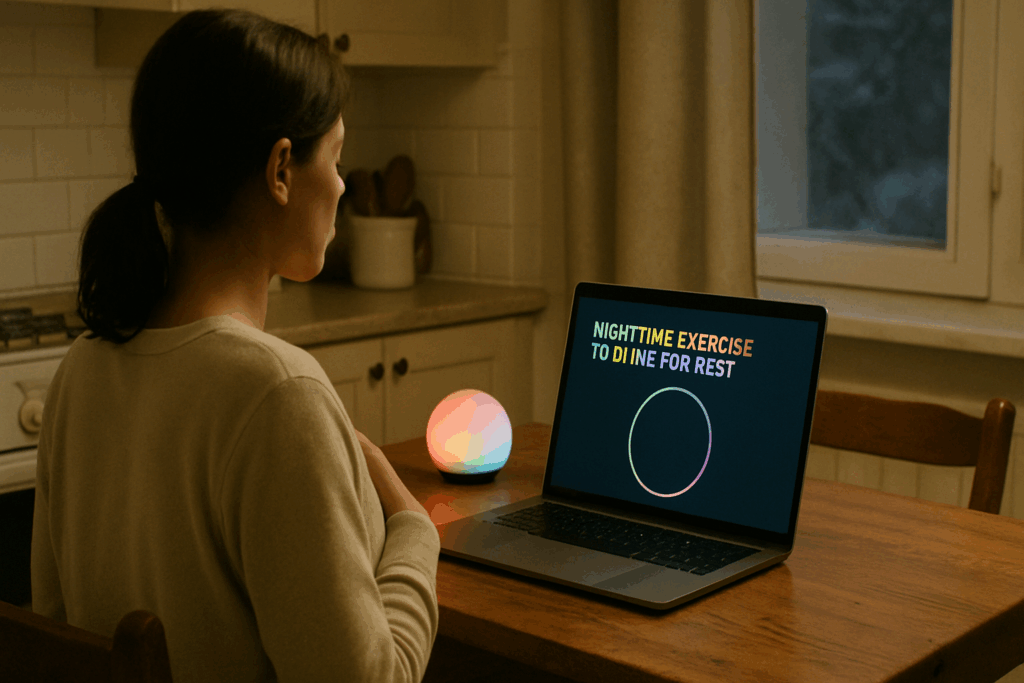
Why Your Evening Workout Matters
Exercising at night used to get a bad rap “you’ll never fall asleep,” they said. But recent research tells a different story. Done right, nighttime workouts can calm the nervous system, improve recovery, and actually help you sleep better. The key is intensity and timing.
When you finish a workout, your core temperature drops as your body cools down. That drop mimics the natural decline that happens before sleep, making it easier to drift off. Add in the recovery boost from active movement blood flow to tense muscles, reduced inflammation, and a mental reset and you’re setting your body up for deeper rest.
The trick is to respect your internal clock. If you’re starting a high intensity lift or cardio sprint at 10 p.m., your body might not wind down until well past midnight. But moving your session to early evening about 2 3 hours before bed can help align your workout with melatonin production and your circadian rhythm.
As for the myth that any late night exercise ruins sleep that’s mostly outdated. Yes, hardcore HIIT or late caffeine fueled sessions can set you back. But moderate strength, yoga, or light cardio? Those tend to reduce stress and support sleep, not sabotage it. The timing matters, but so does the type of movement. Listen to your body. Then move it intentionally, not aggressively.
Best Types of Workouts for Sleep Support
Let’s be clear: a great evening workout isn’t about crushing PRs or hitting max heart rate. It’s about winding the body down not revving it up.
Start with low impact strength training. Simple bodyweight exercises like slow squats, glute bridges, or wall sits help ease muscle tension without flooding your system with adrenaline. The goal is to feel used not exhausted. It’s enough resistance to relieve the day’s physical fatigue, but controlled so your nervous system doesn’t stay on high alert.
Yoga and targeted stretching activate the parasympathetic nervous system the one that tells your body it’s okay to relax now. Focus on longer holds, deep belly breathing, and postures that downshift energy. Think child’s pose, legs up the wall, or gentle spinal twists. This isn’t power yoga. It’s sleep prep.
Light cardio is also on the menu but keep it soft. A 20 minute walk or easy paced bike ride can lower cortisol levels if done within a few hours of bed. No sprints. No heart pounding intervals. Just steady movement that clears the mental clutter and preps your body to rest.
The sweet spot is movement that leaves you calm, lightly tired, and ready to slow down not fired up to keep going.
Sample Evening Routine (30 45 Minutes)
A well built evening routine should taper energy down, not wind it up. The goal isn’t to torch calories it’s to tell your nervous system it’s okay to relax.
Start with a 5 minute dynamic warm up. Keep it light: shoulder rolls, slow arm circles, leg swings, and gentle spinal twists. Mix in some deep nasal breathing to downshift your stress response.
Next up: 15 to 20 minutes of moderate strength work. Think bodyweight circuits with a measured pace no sprinting through reps. Squats, push ups, glute bridges, light dumbbell rows. Rest between sets. You’re looking for muscle engagement, not burnout.
Then move into 10 to 15 minutes of deep stretching or yoga poses. Targets: hips, hamstrings, shoulders, and back. Forward folds, lizard stretch, spinal twists, supported child’s pose. Slow breathing stays in play here hold poses longer than you normally would during the day.
Optional but effective: wrap it all up with 2 3 minutes of breath focused cooldown. Lay still, breathe in through your nose for 4 counts, exhale for 6 to 8. The longer exhale tells your body: sleep’s coming.
Stick with it, and you’re rewiring your system to see movement as a signal not to ramp up, but to let go.
What to Avoid Before Bed

Evening workouts can enhance your sleep if done right. But certain habits in your evening fitness routine can work against rest instead of supporting it. Here’s what to steer clear of:
Skip High Intensity Activities
Intense training close to bedtime stimulates your nervous system and raises cortisol levels, which can delay sleep onset.
Avoid HIIT, sprints, or heavy Olympic style lifts in the evening
These activities elevate your heart rate and body temperature
Your body may struggle to shift into rest mode even hours later
Instead, favor moderate efforts that help ease physical tension without ramping up adrenaline.
Minimize Light and Screen Exposure
Bright lighting and screens from fitness apps or video based workouts can interfere with melatonin production.
Blue light delays your body’s natural sleep signals
Screen based workouts add cognitive stimulation when you should be winding down
Exercise in a softly lit room or use screen filters if needed
Consider low tech options: audio guided yoga, printed routines, or dim lit stretching sessions.
Be Mindful of Post Workout Food
Finishing a workout with a large, heavy meal can make your digestive system work overtime just when your body needs to wind down.
Avoid:
High fat or spicy foods
Overeating or eating too close to bedtime
Instead, opt for:
Light protein plus complex carbs (e.g., Greek yogurt with berries or a banana with almond butter)
Herbal teas like chamomile to support relaxation
Smart post workout nutrition can support muscle repair without compromising sleep quality.
Optimizing Sleep Quality Through Fitness
Evening workouts can do more than help you stay in shape they can actively enhance your sleep quality when done with intention. The key lies in consistency, moderation, and timing.
Why Consistency Wins at Night
When your body learns to expect movement at a certain time each evening, it adapts positively. This habit building approach supports your circadian rhythm, the natural internal process that regulates sleep wake cycles.
A consistent workout schedule signals to the body that it’s time to wind down after activity
Over time, your body begins to associate light to moderate exercise with the approach of rest
Irregular or overly intense workouts at night can disrupt this beneficial pattern
Tip: Stick to similar start times most evenings to reinforce sleep habits.
Movement and Melatonin: What’s the Link?
Light physical activity prior to bedtime has been shown to naturally boost melatonin production the hormone that controls your sleep cycle.
Gentle movement reduces cortisol (stress hormone) while triggering calming chemical responses
Activities like yoga, stretching, or walking increase relaxation without overstimulation
Combined with dim lighting and slow breathing, this environment encourages melatonin release
Want to Learn More?
For a deeper look at how nighttime fitness impacts your rest, check out this research backed guide: The Connection Between Sleep and Fitness
Understanding and aligning your workout habits with the science of sleep can lead to better recovery, mental clarity, and long term wellness.
Fine Tuning Your Routine Over Time
Sleep isn’t static. Stress, travel, hormones life throws curveballs that shift your natural rhythm. So your evening workout has to be flexible. If your usual 9:30 p.m. wind down suddenly starts cutting into your ability to fall asleep, it’s time to dial it back. Shift your routine earlier. Swap heavy squats for yoga. Some nights, just stretching and breathwork is enough.
Start listening instead of pushing. Feeling more energized in the evening? Do moderate strength work. Feeling wired but tired? Keep it light or skip it altogether. Your body’s signals matter more than any fitness calendar.
To track what’s working, keep a sleep journal or use a wearable. Look at trends: how long you sleep, how rested you feel, energy the next morning. Over time, you’ll start seeing the patterns what type of evening movement supports your best sleep, and what undermines it. Fine tuning isn’t about perfection. It’s about paying attention and adjusting until good sleep becomes your default.
Real Results: Why It Works
This isn’t just bro science. Studies consistently show that low to moderate evening exercise can support better sleep. We’re talking measurable improvements falling asleep faster (sleep latency), staying asleep longer (duration), and waking up less often (efficiency). That’s backed by research and echoed in real world results from regular folks dialing in their nighttime movement.
Even more important: consistent exercise helps regulate your circadian rhythm. That’s your internal clock, and when it runs on sync, everything improves energy, focus, recovery. Evening fitness routines act like anchors for your nervous system, signaling the shift from active mode to recovery.
This isn’t about going hard before bed. It’s about being intentional. Move with purpose, create a rhythm, and over time, your body learns when it’s time to shut down.
Take your evenings seriously train smart, wind down right, and let your workout work for your sleep.
 Christine Goindater has opinions about workout techniques and guides. Informed ones, backed by real experience — but opinions nonetheless, and they doesn't try to disguise them as neutral observation. They thinks a lot of what gets written about Workout Techniques and Guides, Nutrition and Healthy Recipes, Fitness Tips and Routines is either too cautious to be useful or too confident to be credible, and they's work tends to sit deliberately in the space between those two failure modes.
Reading Christine's pieces, you get the sense of someone who has thought about this stuff seriously and arrived at actual conclusions — not just collected a range of perspectives and declined to pick one. That can be uncomfortable when they lands on something you disagree with. It's also why the writing is worth engaging with. Christine isn't interested in telling people what they want to hear. They is interested in telling them what they actually thinks, with enough reasoning behind it that you can push back if you want to. That kind of intellectual honesty is rarer than it should be.
What Christine is best at is the moment when a familiar topic reveals something unexpected — when the conventional wisdom turns out to be slightly off, or when a small shift in framing changes everything. They finds those moments consistently, which is why they's work tends to generate real discussion rather than just passive agreement.
Christine Goindater has opinions about workout techniques and guides. Informed ones, backed by real experience — but opinions nonetheless, and they doesn't try to disguise them as neutral observation. They thinks a lot of what gets written about Workout Techniques and Guides, Nutrition and Healthy Recipes, Fitness Tips and Routines is either too cautious to be useful or too confident to be credible, and they's work tends to sit deliberately in the space between those two failure modes.
Reading Christine's pieces, you get the sense of someone who has thought about this stuff seriously and arrived at actual conclusions — not just collected a range of perspectives and declined to pick one. That can be uncomfortable when they lands on something you disagree with. It's also why the writing is worth engaging with. Christine isn't interested in telling people what they want to hear. They is interested in telling them what they actually thinks, with enough reasoning behind it that you can push back if you want to. That kind of intellectual honesty is rarer than it should be.
What Christine is best at is the moment when a familiar topic reveals something unexpected — when the conventional wisdom turns out to be slightly off, or when a small shift in framing changes everything. They finds those moments consistently, which is why they's work tends to generate real discussion rather than just passive agreement.