

Are you looking to convert 1700 pesos mexicanos a pesos chilenos? As of [Current Month, Year], 1700 Mexican Pesos is worth approximately X Chilean Pesos.
This guide goes beyond just giving you the number. We’ll dive into how exchange rates work, where to find the best deals, and common mistakes to avoid. By the end, you’ll understand not just the ‘what’ but the ‘how’ and ‘why’ of currency conversion.
This will empower you to make smarter financial decisions.
This information is super useful for travelers, online shoppers, and anyone sending money between Mexico and Chile. Let’s get started.
What Determines the Mexican to Chilean Peso Exchange Rate?
Let’s start with the basics. An exchange rate is the price of one country’s currency in terms of another. Simple, right?
This rate isn’t set in stone. It changes every day based on supply and demand in the global foreign exchange (forex) market.
Several key economic factors influence these fluctuations. Inflation rates, interest rates set by central banks like Banco de México and Banco Central de Chile, economic growth, and political stability all play a role.
Now, there’s a difference between the mid-market rate and the consumer rate. The mid-market rate is what you see on platforms like Google or XE.com. It’s the ‘real’ rate.
The consumer rate, on the other hand, is what you actually get from a bank or exchange service.
Think of it this way: the mid-market rate is like the wholesale price, while the consumer rate is the retail price after the service adds its profit margin or ‘spread’.
Understanding these rates can help you make better decisions when converting currencies. For example, if you’re looking at 1700 pesos mexicanos a pesos chilenos, knowing the mid-market rate can help you spot a good deal or avoid a bad one.
How to Calculate Your 1700 MXN to CLP Conversion
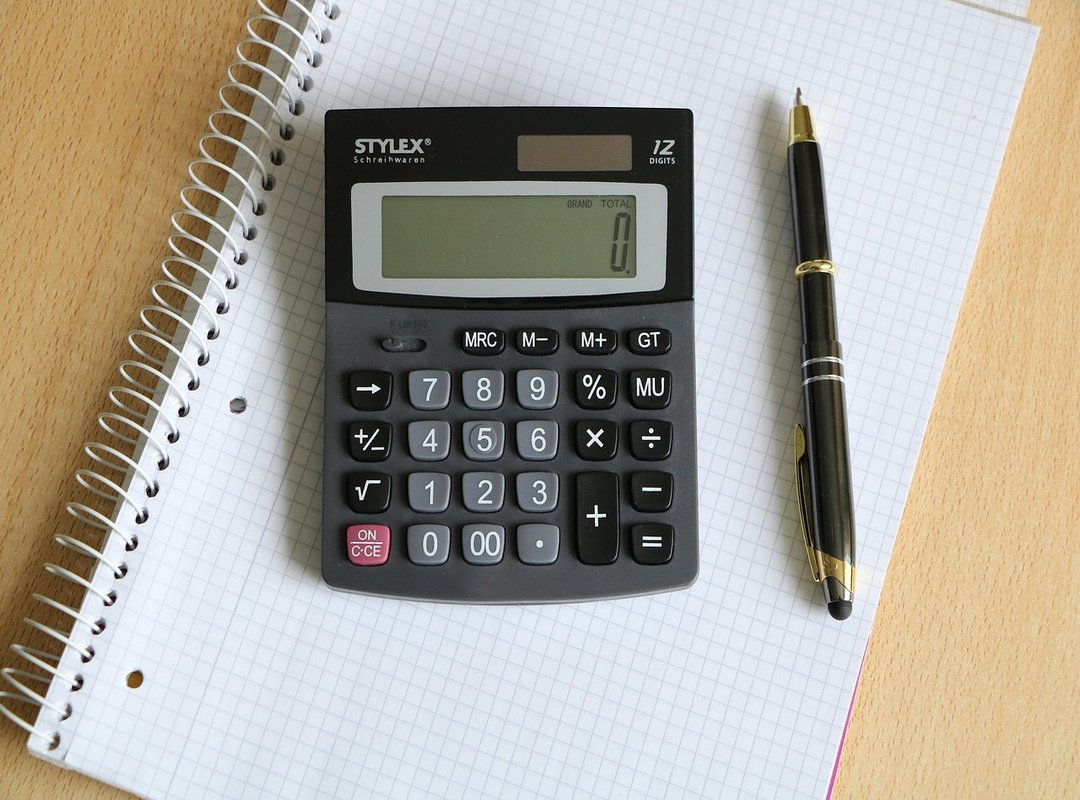
Converting 1700 pesos mexicanos a pesos chilenos is straightforward. The formula is simple: Chilean Pesos (CLP) = 1700 MXN * current MXN to CLP exchange rate.
If the current rate is 1 MXN = 54.5 CLP, the calculation is 1700 * 54.5 = 92,650 CLP. Easy, right?
To find the current exchange rate, use reliable, free online tools like Google Finance, XE.com, or OANDA. These sites have converters that make it a breeze to get the live mid-market rate.
Just enter the amount in MXN and select CLP as the target currency. The tool will do the math for you.
Remember, the online result is a benchmark. The actual amount of CLP you receive will be slightly lower due to fees or the exchange service’s spread. Always check these details before making a transaction.
Pro Tip: Focus on the final amount you will receive, not just the advertised exchange rate. Hidden fees can be misleading and eat into your total.
By following these steps, you’ll get a clear idea of how much CLP you’ll end up with, helping you make better financial decisions.
Where to Get the Best Rates: Banks vs. Online Services vs. Cash
When it comes to exchanging currency, some options are better than others. Let’s break it down from worst to best. Twspoonfitness
Airport kiosks and physical exchange booths are almost always the worst option. High overhead costs mean poor rates and high fees. It’s like paying for a movie ticket but getting a bad seat.
Major banks are a bit better, but still not great. They provide convenience, sure, but their exchange rates usually include a significant markup over the mid-market rate. Think of it as buying a coffee at a fancy café—nice, but you’re paying extra for the ambiance.
ATMs in the foreign country can be a good option for travelers. Withdrawals often use a competitive exchange rate. But watch out for flat fees from both your home bank and the local ATM.
It’s like getting a free drink with a meal, only to find out there’s a service charge.
Online money transfer services, like Wise or Remitly, are the best option for sending money. They operate with lower overhead and typically offer rates much closer to the mid-market rate with transparent fees. It’s like streaming a movie at home—better value and no hidden costs.
- Worst: Airport Kiosks/Physical Exchange Booths
- Better, but Expensive: Major Banks
- Good for Travelers: ATMs in the Foreign Country
- Best Option: Online Money Transfer Services
If you need to convert 1700 pesos mexicanos a pesos chilenos, online services will give you the most bang for your buck.
Common Questions About Exchanging Mexican and Chilean Pesos
Q1: Is it better to exchange money before I travel to Chile?
A: It’s wise to exchange a small amount for immediate needs, but you’ll often get better rates by withdrawing from a local ATM in Chile.
Q2: How much does it cost to send 1700 MXN to Chile?
A: The cost depends entirely on the service you use. A bank might charge a flat fee plus a poor rate, while an online service will have a smaller, more transparent fee.
Q3: Does the exchange rate change throughout the day?
A: Yes, it can change minute by minute. However, for a personal transaction of 1700 pesos, these small fluctuations are unlikely to have a major impact.
Q4: What is the currency code for each peso?
A: The Mexican Peso is MXN. The Chilean Peso is CLP. Using these codes can help you find the most accurate information online.
When dealing with 1700 pesos mexicanos a pesos chilenos, always check the latest rates and fees. This way, you can make sure you’re getting the best deal.
Making Your Currency Exchange With Confidence
Converting 1700 pesos mexicanos a pesos chilenos is straightforward when you know where to look and what to look for. Always compare the final amount you will receive after all fees, not just the advertised exchange rate. This approach ensures you get the best deal.
You are now equipped to avoid common pitfalls and find the best value for your money. Before you commit, take 60 seconds to check the rate on an online service against what your bank is offering. That one minute can save you money.
 There is a specific skill involved in explaining something clearly — one that is completely separate from actually knowing the subject. Louisianah Wellspringster has both. They has spent years working with wellness and lifestyle advice in a hands-on capacity, and an equal amount of time figuring out how to translate that experience into writing that people with different backgrounds can actually absorb and use.
Louisianah tends to approach complex subjects — Wellness and Lifestyle Advice, Fitness Tips and Routines, Expert Fitness Insights being good examples — by starting with what the reader already knows, then building outward from there rather than dropping them in the deep end. It sounds like a small thing. In practice it makes a significant difference in whether someone finishes the article or abandons it halfway through. They is also good at knowing when to stop — a surprisingly underrated skill. Some writers bury useful information under so many caveats and qualifications that the point disappears. Louisianah knows where the point is and gets there without too many detours.
The practical effect of all this is that people who read Louisianah's work tend to come away actually capable of doing something with it. Not just vaguely informed — actually capable. For a writer working in wellness and lifestyle advice, that is probably the best possible outcome, and it's the standard Louisianah holds they's own work to.
There is a specific skill involved in explaining something clearly — one that is completely separate from actually knowing the subject. Louisianah Wellspringster has both. They has spent years working with wellness and lifestyle advice in a hands-on capacity, and an equal amount of time figuring out how to translate that experience into writing that people with different backgrounds can actually absorb and use.
Louisianah tends to approach complex subjects — Wellness and Lifestyle Advice, Fitness Tips and Routines, Expert Fitness Insights being good examples — by starting with what the reader already knows, then building outward from there rather than dropping them in the deep end. It sounds like a small thing. In practice it makes a significant difference in whether someone finishes the article or abandons it halfway through. They is also good at knowing when to stop — a surprisingly underrated skill. Some writers bury useful information under so many caveats and qualifications that the point disappears. Louisianah knows where the point is and gets there without too many detours.
The practical effect of all this is that people who read Louisianah's work tend to come away actually capable of doing something with it. Not just vaguely informed — actually capable. For a writer working in wellness and lifestyle advice, that is probably the best possible outcome, and it's the standard Louisianah holds they's own work to.