

You’re tired of scrolling past another “perfect” workout plan that leaves you sore and confused.
Or reading yet another nutrition tip that contradicts the one you followed last week.
I’ve been there. Tried them all. Wasted months on plans that sounded great but fell apart by Wednesday.
It’s not your fault. The noise is real. And it’s getting louder.
What if you didn’t need another fad? What if you just needed clarity?
That’s why I wrote this. Not to sell you a program. Not to hype some new trend.
Just to lay out what actually works. Based on years of real-world testing and consistent results.
This is Advice Thespoonathletic. Stripped bare. No fluff.
No dogma.
You’ll get the core principles for fueling your body and training your body. Nothing more. Nothing less.
And yes (it’s) all science-backed. Not theory. Not hope.
Real outcomes.
Ready to stop guessing? Let’s go.
Fuel Is Fuel. Not a Trophy
I used to log every calorie like it was evidence in a trial.
Then I ran my first half-marathon on keto. My legs turned to wet cardboard at mile 10. (Spoiler: I walked the last two.)
Food is fuel for performance, not punishment. Not currency. Not something you earn by suffering through another workout.
You wouldn’t put cheap gas in a race car. Why treat your body any differently?
Restrictive diets ignore one basic fact: movement costs energy. Real energy. Not just “calories in vs. calories out” (but) iron, glycogen, electrolytes, protein turnover.
Keto? Fine if you’re sedentary and love bacon. Terrible if you sprint, lift, or even walk uphill without wanting to nap for three hours.
Extreme cutting? That’s how you lose muscle before fat. And yes.
I’ve done it. Woke up sore for five days straight and couldn’t lift my coffee mug without shaking.
That’s why I built the Performance Plate. No scales. No apps.
Just three plates taped to my fridge.
Rest day: mostly veggies, some protein, minimal starch.
Training day: double the carbs, timed around the workout.
Recovery day: add healthy fats and extra protein.
It’s visual. It’s fast. It works.
This isn’t about taking things away. It’s about adding what your body actually needs (right) when it needs it.
Thespoonathletic gave me the first version of this idea. Their Advice Thespoonathletic system helped me stop counting and start responding.
Your body talks. Are you listening. Or just yelling back?
The 3 Pillars of Sustainable Athletic Nutrition
I used to count every gram. Then I stopped.
Because counting grams doesn’t build habits. It builds stress.
Master Your Macros is not about perfection. It’s about knowing what each fuel does.
Protein repairs muscle. Carbs power your workout. Fats keep your hormones steady and your brain sharp.
That’s it. No mystery.
Eat carbs before you move (oatmeal,) banana, rice cakes. Eat protein after. Eggs, Greek yogurt, chicken.
Fats? Sprinkle them in throughout the day. Avocado on toast.
Nuts in your salad. Olive oil in your dressing.
You don’t need a scale. You need pattern recognition.
Hydration is a Non-Negotiable.
Water isn’t just H₂O. It’s sodium. Potassium.
Magnesium. Especially if you sweat.
Your baseline? Take your weight in pounds, divide by two. That’s your minimum ounces per day.
A 160-lb person needs at least 80 oz. Add more if you train hard or live somewhere hot (like right now (July) heatwave, anyone?).
Skip the plain water-only dogma. If you cramp, you’re low on sodium. If you feel sluggish mid-afternoon, potassium might be missing.
Consistency Over Perfection.
This is where most people quit. Not because they fail, but because they think one off-plan meal erases three weeks of work.
It doesn’t.
The 80/20 principle works because it’s human. Eat well 80% of the time. Let the other 20% breathe (dinner) out, weekend pancakes, that post-run ice cream.
You’ll stick with it longer. That’s the whole point.
I’ve watched athletes burn out chasing 100%. I’ve watched others thrive at 80%.
Advice Thespoonathletic isn’t about rigid rules. It’s about showing up. Again and again (without) self-punishment.
Start here. Not tomorrow. Not Monday.
Now.
Smarter Training: Strength Without the Crash
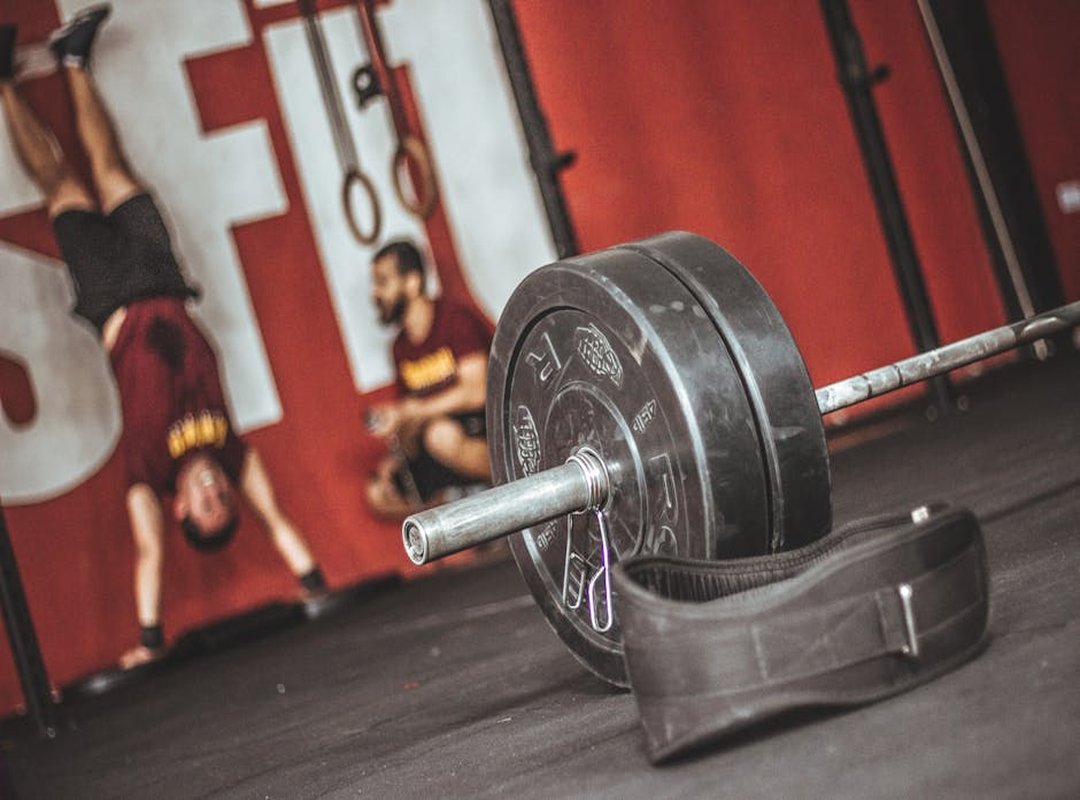
I used to think soreness meant progress.
Turns out I was just punishing myself.
Effective strength building isn’t about grinding harder every day. It’s about pairing smart training with real nutrition. No one gets stronger on protein alone.
And no one recovers on reps alone.
Progressive overload sounds fancy. It’s not. It means adding one more rep, lifting five more pounds, or holding a plank three seconds longer.
That’s it. You don’t need to overhaul your whole routine weekly. Just nudge it forward.
Gently, consistently.
A balanced week has three non-negotiable pieces:
Strength Training. Your foundation. Cardiovascular Health (because) lungs and heart matter just as much as quads.
Mobility/Recovery. The part everyone skips until something clicks, pops, or stops working.
Soreness? Forget it. Muscle soreness (DOMS) doesn’t measure effort.
It measures unfamiliar stress. You can gain strength without being wrecked for 48 hours. In fact, you should.
I stopped chasing soreness. My gains doubled. My injuries dropped to zero.
What changed? I prioritized recovery like it was part of the workout (not) an afterthought.
You’re probably wondering: How do I actually structure this?
That’s where Thespoonathletic comes in. Their Advice Thespoonathletic system maps out exactly how to layer strength, cardio, and mobility without overlap or burnout.
Rest is not passive. It’s when your body rebuilds. Skip it, and you’re just rehearsing fatigue.
Do you really need to feel wrecked to earn your results?
Or would you rather show up strong (Monday) through Friday. For years?
Progress Killers: Are You Doing This?
I see it all the time. People grinding hard (then) going nowhere.
They’re under-fueling their workouts. Then they wonder why they feel weak. (Spoiler: your body isn’t a phone battery.)
Obsessing over the scale is another one. Strength gains? Better sleep?
More energy? Those matter way more than a number that lies to you daily.
Skipping rest days is the quietest killer. Your muscles don’t grow in the gym. They grow after.
While you’re asleep. Or eating. Or doing literally nothing.
Burnout isn’t dramatic. It’s just you showing up tired for three weeks straight. Then pulling a hamstring on Tuesday.
You don’t need more willpower. You need better signals.
The Advice Thespoonathletic approach fixes this fast.
That’s why I point people to the Advice guide thespoonathletic (it) cuts through the noise and names the exact habits holding you back.
You’re Not Lost. You’re Just Unmapped.
I’ve been there. Staring at protein labels like they’re ancient runes. Wondering if “just move more” counts as advice.
The fitness world doesn’t help. It shouts. It contradicts itself.
It leaves you guessing.
That’s why Advice Thespoonathletic exists. Not to overwhelm you, but to ground you.
You don’t need a 90-day overhaul. You need one thing that sticks.
This week? Pick hydration. Just that.
Calculate your water target. Hit it (every) single day.
Notice how your energy shifts. How your focus sharpens. How much less foggy you feel.
That’s not magic. That’s clarity.
And it starts now. Not next Monday.
Your body already knows what to do.
You just needed permission to begin small.
Go drink that first glass.
Then tell me how it feels.
 Christine Goindater has opinions about workout techniques and guides. Informed ones, backed by real experience — but opinions nonetheless, and they doesn't try to disguise them as neutral observation. They thinks a lot of what gets written about Workout Techniques and Guides, Nutrition and Healthy Recipes, Fitness Tips and Routines is either too cautious to be useful or too confident to be credible, and they's work tends to sit deliberately in the space between those two failure modes.
Reading Christine's pieces, you get the sense of someone who has thought about this stuff seriously and arrived at actual conclusions — not just collected a range of perspectives and declined to pick one. That can be uncomfortable when they lands on something you disagree with. It's also why the writing is worth engaging with. Christine isn't interested in telling people what they want to hear. They is interested in telling them what they actually thinks, with enough reasoning behind it that you can push back if you want to. That kind of intellectual honesty is rarer than it should be.
What Christine is best at is the moment when a familiar topic reveals something unexpected — when the conventional wisdom turns out to be slightly off, or when a small shift in framing changes everything. They finds those moments consistently, which is why they's work tends to generate real discussion rather than just passive agreement.
Christine Goindater has opinions about workout techniques and guides. Informed ones, backed by real experience — but opinions nonetheless, and they doesn't try to disguise them as neutral observation. They thinks a lot of what gets written about Workout Techniques and Guides, Nutrition and Healthy Recipes, Fitness Tips and Routines is either too cautious to be useful or too confident to be credible, and they's work tends to sit deliberately in the space between those two failure modes.
Reading Christine's pieces, you get the sense of someone who has thought about this stuff seriously and arrived at actual conclusions — not just collected a range of perspectives and declined to pick one. That can be uncomfortable when they lands on something you disagree with. It's also why the writing is worth engaging with. Christine isn't interested in telling people what they want to hear. They is interested in telling them what they actually thinks, with enough reasoning behind it that you can push back if you want to. That kind of intellectual honesty is rarer than it should be.
What Christine is best at is the moment when a familiar topic reveals something unexpected — when the conventional wisdom turns out to be slightly off, or when a small shift in framing changes everything. They finds those moments consistently, which is why they's work tends to generate real discussion rather than just passive agreement.